
{主关键词}
爱上小男人
How technology boosts Beijing's air pollution governance_我的网站

一 | Actor Ali Fazal is on a roll. He is currently working on Mirzapur: The Movie and also has Aamir Khan’s upcoming production Lahore 1947, in the pipeline. Amid this, reports are doing the rounds that the actor is set to collaborate with Shakun Batra for his next. Ali recently posted a note on Instagram's story section that read, “It’s a wrap.” This short message quickly created curiosity that the actor has completed a new project. And now, if sources are to be believed, the actor is collaborating with filmmaker Shakun Batra. According to sources, Ali is rumoured to be teaming with the Gehraiyaan director for a brand-new film centred around the world of social media. While no official announcement has been made, insiders suggest that the project may explore the complexities, pressures, and dualities of digital life an intriguing shift for both Ali and Shakun, who is known for his nuanced, character-driven storytelling. A source close to the development said, “Ali has been quietly working on something very exciting. His recent ‘It’s a wrap’ post has only added fuel to the news. He and Shakun Batra have collaborated on a film that dives deep into the impact of social media on modern relationships and identity. This will be one of the most unique projects Ali has taken up, and fans are eagerly waiting for an official confirmation.” Talking of Ali's other projects, Mirzapur: The Film has created quite the buzz. While the makers have not revealed much details about the film, the cast members often share BTS stills, keeping the intrigue alive in fans. On the other hand, Sakun Batra last directed the film Gehraiyaan in 2022. It starred Deepika Padukone, Siddhant Chaturvedi, Ananya Panday and Dhairya Karwa. It will be exciting to see what the filmmaker comes up with next. Also Read: Pankaj Tripathi, Ali Fazal, and Shweta Tripathi Wrap Up Banaras Schedule for Mirzapur: The Movie。
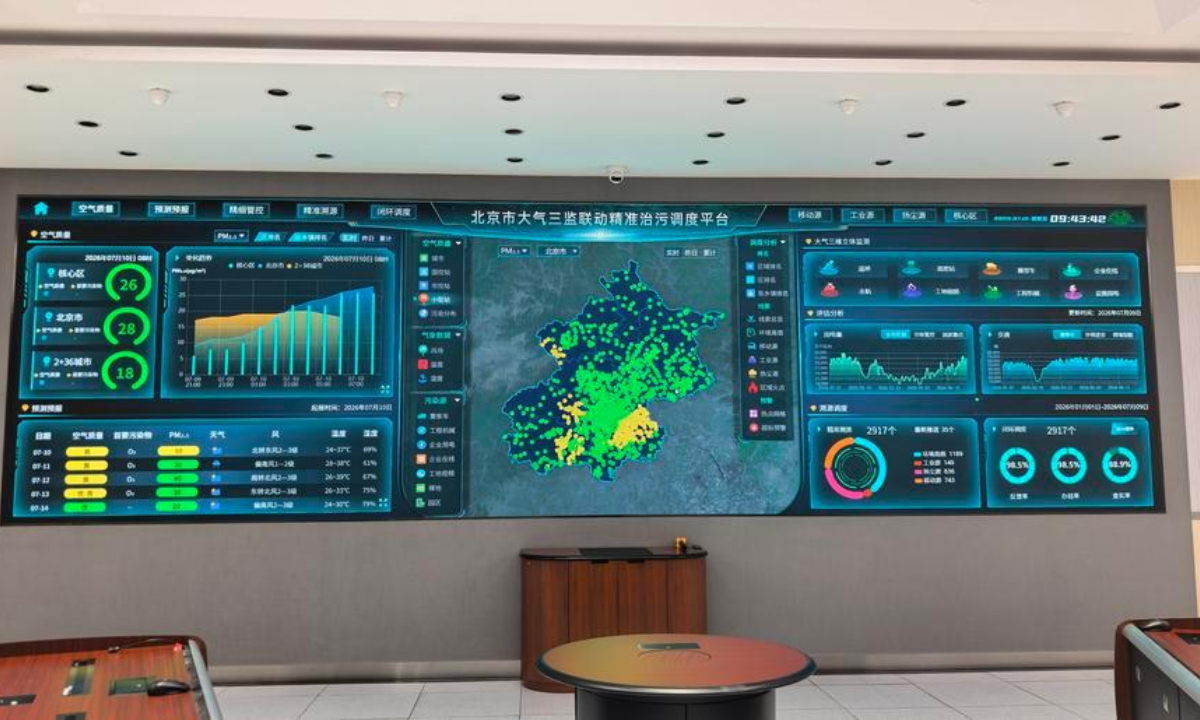
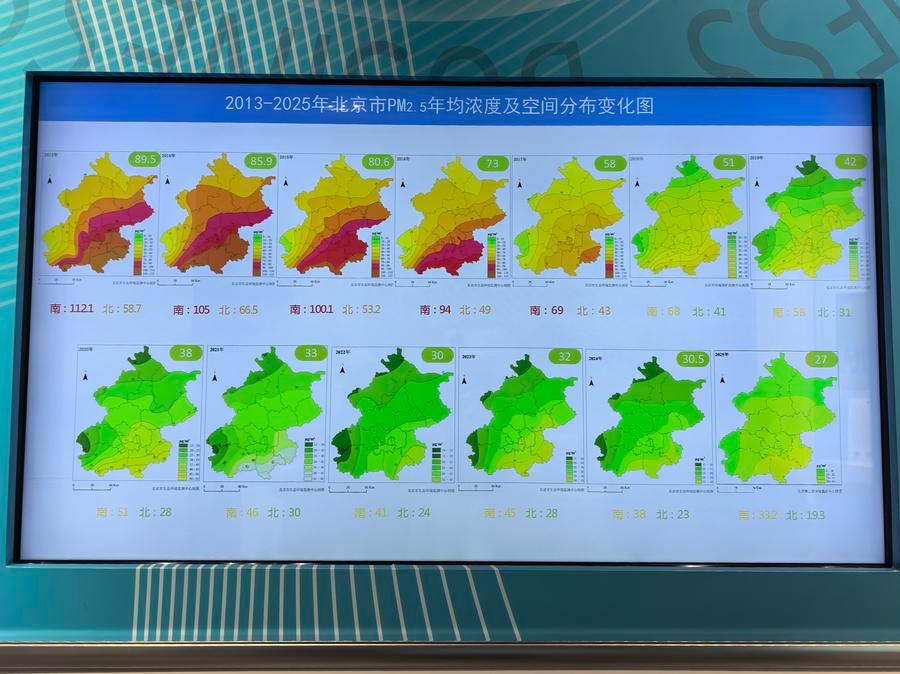
In 2025, Beijing recorded 311 days with good air quality and only one heavily polluted day, compared with 58 heavily polluted days in 2013, when the city officially began releasing PM2.5 monitoring data. The annual average PM2.5 concentration, a key indicator of air quality, fell from 89.5 micrograms per cubic meter in 2013 to 27 micrograms per cubic meter in 2025, a decline of nearly 70 percent.
The progress has drawn international attention. The United Nations Environment Programme has highlighted Beijing's experience in improving air quality as a model for other cities.
According to experts at the Beijing Municipal Ecological and Environmental Monitoring Center, the cleaner air is the result of a comprehensive system integrating environmental monitoring, scientific analysis, policymaking, regional cooperation and law enforcement -- with digital technologies now woven into every link of that chain.
MORE TARGETED APPROACH
Effective governance begins with accurate monitoring. Beijing has established a multi-level air-quality monitoring network. Figures show 35 standard monitoring stations across the city continuously measure six major pollutants, while more than 1,000 compact sensors deployed across communities and townships provide more detailed information on local air-quality variations.
The monitoring system was gradually built by the Beijing Municipal Ecological and Environmental Monitoring Center, one of China's earliest ecological and environmental monitoring institutions, responsible for monitoring Beijing's air, water, noise, soil environments and ecosystems.
The center has developed an analytical system that can identify around 125 components of PM2.5, covering most of its composition and helping researchers trace pollution sources.
"Source analysis helps us identify the major contributors to pollution at different stages, providing a scientific basis for policymakers to target key emission sources," said Li Yunting, technical director at the center.
Coordinated by the Beijing Municipal Ecology and Environment Bureau, the center has conducted four rounds of PM2.5 source analysis studies with other institutions, with results released in 2014, 2018, 2021 and 2025.
The latest analysis showed that regional transport contributed 57 percent of Beijing's PM2.5 pollution. Among local sources that accounted for the remaining 43 percent, vehicle emissions and residential sources represented the largest share of pollution, a distinctive characteristic of a major international metropolis.
The monitoring results have provided scientific support for a series of pollution-control measures. For example, Beijing has promoted new-energy vehicles to reduce transport emissions and adopted advanced techniques, including air-supported membrane structures, to control dust emissions. Meanwhile, coal combustion pollution, once a major contributor, has almost been eliminated and is no longer listed among the main sources, reflecting broader national efforts to reduce coal consumption, promote clean energy and upgrade heavily polluting industries.
With PM2.5 concentrations now at relatively low levels, further gains in air quality will depend on more targeted, science-driven approaches.
SMARTER ENVIRONMENTAL GOVERNANCE
Beyond monitoring pollution, Beijing has built a data-driven environmental governance system that links monitoring, regulation and enforcement in a closed loop from detection to action and follow-up evaluation.
Developed by the center and known as the innovative regulation-monitoring-inspection linkage model, the system integrates artificial intelligence, the Internet of Things, satellite remote sensing and vehicle-mounted monitoring technologies to pull together environmental data from multiple sources onto a unified platform.
"The system brings information that was once scattered across different departments onto a single platform," said Zhang Likun, director of the smart system division at the center, adding that this enables off-site enforcement and joint cross-sector actions involving housing, water resources and transportation, significantly improving the efficiency and precision of environmental management.
Using more than 30 intelligent algorithms, the platform automatically analyzes data and identifies potential pollution risks, based on which monitoring staff identify the most pressing problems and forward them to enforcement departments.
The approach has already drawn international attention. Clean Air Asia, an international nongovernmental organization focused on improving air quality across Asia, featured the system as a representative case study in its "China Air 2025" report. The model was also presented at the 2026 Better Air Quality Conference and recognized with the Certificate for Clean Air Best Practice Sharing.
China has integrated ecological conservation into its modernization drive. As the country speeds up efforts under the Beautiful China Initiative, Beijing's experience demonstrates how technology can support more precise, coordinated and sustainable environmental governance.
。
Current article:http://x80vb7.qixicuorenchouzuan.buzz/news/20260826_177.html
Published on:00:02:44
- 506新冠新毒株KP.2在美英等多国迅速传播,或更具传染性
- 3062《昭和米国物语》官宣试玩新细节 诚挚邀请玩家
- 30612舌尖上的NTU 解锁校园最新美食餐厅
- 1386710售39.69万起 新款沃尔沃XC60价格公布 插混版将于6月26日上市
- 6532122北京同仁堂六味地黄丸借势世界杯开启体育跨界 经典古方赋能年轻化新传播
- 366中报关注度持续升温,机构建议配置三条业绩主线
- 9158新时代好少年 热心公益奉献爱心 宣讲传承红色基因
- 2111007“亵渎DC角色的垃圾宇宙”——《灯侠》第一集结局令大量绿灯侠粉丝感到不满
- 955印度电商巨头Flipkart推出Flipverse 致力打造元宇宙购物体验
- 790995100万引进!官方:31岁拜仁中场帕利尼亚加盟本菲卡,总价1900万
- 52722025年京东618什么时候最便宜?京东618红包口令最新:福利666,抢加码红包
- 92364预警齐发,中央气象台:今晚至明晚,浙江、福建、广东、广西、江西、湖南、贵州、云南、内蒙古、山西、河北、北京等地有大雨或暴雨
- 9583854江西省第六届“双品网购节”在昌启动
- 65144财经慧说丨机器人“超级周”,来了
- 437928月18日《洛奇英雄传》全新英雄 - 精灵弓箭手登场!
- 190502主动投案,贵州威宁自治县第三中学退休教师肖宁接受监察调查
- 7090最强复仇者联盟!76人全员憋着一口气,新赛季每人心中都有执念
- 213018梅开二度,重庆铜梁龙队长向余望当选中甲第4轮最佳球员
- 55940“男鞋第一股”自救:奥康国际一边收缩,一边跨界
- 672“三爱少年科学院”院徽和吉祥物定了!
- 13262拼多多维护商家以次充好不当得利,永远让机器人回复我,我不上人工客服
- 43199212026年(截至目前)最昂贵的10张宝可梦传说:阿尔宙斯卡牌
我的网站热门国内
- Copyright @ 2016-2017 我的网站 版权所有